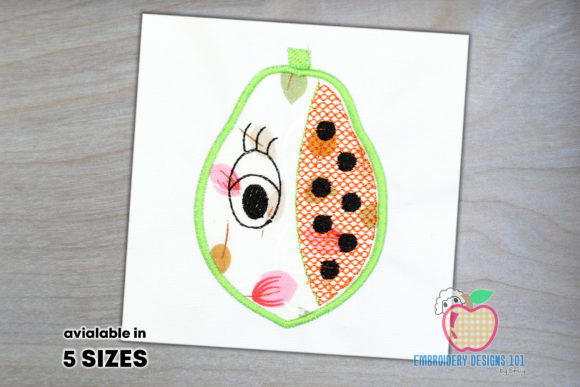
Papaya with an Eye Applique Pattern Review
When I first opened the Papaya with an Eye Applique Pattern, I knew immediately this was not just another fruit design. As someone who has stitched hundreds of machine embroidery designs for craft fair products, I look for personality, clarity, and production efficiency. This embroidery file delivers all three. The combination of a ripe papaya with a playful eye gives it a whimsical, modern feel that lands somewhere between cute and bold. It is not farmhouse rustic or minimalist. It is cheeky, tropical, and conversation-starting. For a weekend craft fair booth, that is gold. Customers stop, smile, and ask about the story behind the design. That moment is exactly what turns a browser into a buyer.
First Impression and Visual Mood
The Papaya with an Eye Applique Pattern reads as fun, fresh, and slightly irreverent. The applique technique adds texture and dimension that standalone embroidery often lacks. In person, the layered fabric pieces create depth that catches light differently than flat stitching. That texture matters when you are displaying handmade products on a table under market lighting or afternoon sun. The eye motif gives the papaya a personality that feels contemporary without being cartoonish. It is the kind of design that works for customers who want their accessories to express a sense of humor or individuality. I would describe the mood as tropical pop with a handmade soul. It is not trying to be elegant or premium in a traditional sense, but it carries a confident, artisan quality that appeals to shoppers looking for something unexpected.
Best Product Applications for the Craft Fair Booth
After testing the Papaya with an Eye Applique Pattern on several blanks, I can tell you where it shines brightest and where it needs careful consideration. The design is versatile, but not every product format does it justice.
Tote Bags
A medium-sized tote bag design is a natural home for this pattern. The papaya sits well centered or slightly offset on a canvas or cotton tote. The applique layers read clearly against the bag fabric, especially if you choose a contrasting background. I stitched it onto a natural color tote with bright orange and green applique fabrics, and the eye popped beautifully in black and white. Customers at the booth picked it up within seconds. That is the power of a well-executed applique on a functional item.
Aprons
Apron embroidery works very well with this design. The playful papaya feels at home on kitchen or garden aprons. Because the design is not overly large, it fits nicely on the chest panel or lower pocket area. I would recommend positioning it where the eye becomes a focal point without competing with the wearer's face. The applique layers hold up well on apron-weight cotton, and the color changes separate cleanly enough for efficient production.
Tea Towels
Tea towel embroidery is a staple for craft fair sellers, and this pattern fits the format. However, you need to be mindful of fabric texture. Terry cloth or heavily textured towels can swallow the finer details of the eye. I tested it on a smooth linen blend towel, and the applique edges sewed cleanly. The design reads well as a small accent near the hem or centered for a bolder statement. Given the tropical theme, it pairs nicely with citrus or fruit-themed towels if you offer a collection.
Embroidered Patches
For sellers who produce embroidered patches, this design is a strong candidate. The applique technique translates well to patch form, especially if you use a sturdy backing and satin stitch edge. Patches are low-cost, high-margin items that customers grab as impulse buys. I made a few patches with the Papaya with an Eye Applique Pattern and pinned them to a display board. They drew attention from younger shoppers and anyone looking for a unique iron-on. Keep the patch size moderate so the eye details remain crisp.
Caps and Headwear
I approached cap embroidery with caution. Curved surfaces can distort applique shapes if the design is too wide or has dense stitch areas. The Papaya with an Eye Applique Pattern is compact enough to fit on a cap front, but I recommend reducing the size slightly and testing on a scrap cap first. The applique layers need to sit flat, and the eye detail must remain centered. If you get the placement right, it makes a bold, quirky cap that stands out from the usual logo work.
Small Pouches and Zip Bags
Small fabric pouches are another excellent vehicle for this design. The papaya size works as a focal motif on a cosmetic bag or pencil case. Because the design uses applique, the finished product feels substantial and well-made. I stitched it onto a cotton pouch with a zipper top, and it sold within the first hour of a market. The combination of utility and playful design is hard to beat.
Pillow Covers
For home decor, the Papaya with an Eye Applique Pattern adds a pop of personality to a pillow cover. I stitched it onto a 16-inch square euro pillow in a solid cream color. The applique fabric stood out beautifully, and the eye became the conversation piece. This product appeals to customers looking for quirky, handmade decor that is not mass-produced. It photographs well for Etsy listings too, which is critical for online sales.
Market Bags and Gift Items
Reusable market bags are trending, and this pattern fits the eco-friendly, fun vibe. I also produced a few handmade gifts like fabric coasters and small wall hangings featuring the design. For giftable items, the applique adds perceived value. Customers perceive applique as more labor-intensive and therefore worth a higher price point. That is a significant advantage when you are pricing handmade products at a craft fair.
Practical Selling and Production Considerations
When I evaluate a machine embroidery design for batch production, I think about repeatability, consistency, and speed. The Papaya with an Eye Applique Pattern performs well on all three counts. The color changes are separated logically, which means less thread changing and fewer interruptions. For a seller producing dozens of items for a show, that efficiency matters. The applique steps are clear, and the tack-down stitches hold the fabric securely before the satin stitch edge. I recommend using a lightweight fusible web to baste your applique fabric in place before stitching. This prevents shifting and ensures clean edges across multiple units.
One note: the design uses multiple thread colors, but they are common shades that most embroiderers already have in inventory. You do not need specialty threads. That keeps your production cost low and your profit margin healthy. I also appreciate that the embroidery file comes in multiple formats, which saves time when switching between machines or selling design assets to other makers.
Technical Embroidery Notes for Best Results
Before you run a batch of Papaya with an Eye Applique Pattern designs for your booth, take these steps seriously. They will save you from frustrating mistakes and wasted materials.
- Test on scrap fabric first. Every fabric behaves differently. Test the design on the exact fabric you plan to use for your finished products. Check the applique alignment and edge quality.
- Check thread contrast. The eye needs to be clearly visible against the papaya body. Use a high-contrast thread color for the eye outline and pupil. Black or very dark gray works best.
- Review spacing and hoop size. Confirm the design fits within your available hoop size. The description does not specify exact dimensions, so measure the design in your software and match it to your hoop before cutting fabric.
- Inspect stitch density. Applique designs typically have lower stitch counts than full-embroidery designs, which is good for production speed. However, check that the satin stitch edges are not overly dense, especially if you are using thick applique fabric. Dense stitch density can cause fabric puckering.
- Use the right stabilizer. For applique on medium-weight fabrics like cotton or canvas, a tear-away stabilizer works well. On stretchy or loosely woven fabrics, use a cut-away stabilizer to prevent distortion.
- Create at least one real mockup. Photograph the finished product and use it in your booth display and Etsy listings. A real photo outsells a digital mockup every time. Customers want to see how the applique pattern looks in actual fabric and lighting.
- Compare fabric colors. The papaya body works best in bright orange or coral tones. The leaf should be a rich green. The background fabric should contrast enough that the applique stands out. Avoid putting the design on a busy print, as the eye will get lost.
- Confirm commercial licensing. Before selling any finished products, verify that you have the appropriate commercial license for this digital embroidery file. The description does not specify license terms, so check with the designer or platform. Most small shop sellers need a commercial use license to legally sell items stitched from the design.
Photography and Online Selling
If you sell online through Etsy or your own shop, the Papaya with an Eye Applique Pattern photographs well because of its bold shapes and clear color separation. I recommend shooting your products in natural light with a simple background. The applique texture shows best in side lighting that creates subtle shadows. For printable mockups, you can embed the design image onto a tote or apron photo, but a real stitched sample always performs better. Include close-up shots that show the applique layers and the eye detail. Customers shopping for handmade products online want to see the craftsmanship.
When writing Etsy listings, mention that the item features an applique design with separate fabric pieces and layered stitching. That specificity signals quality and justifies your pricing. Use keywords like machine embroidery design, handmade product, and craft fair product in your tags and description.
Booth Display and Customer Engagement
At a craft fair, the Papaya with an Eye Applique Pattern acts as a natural conversation starter. I displayed a tote bag and a pillow cover side by side on a small table easel. Customers stopped to look at the eye, then asked about the process. That engagement is invaluable. I used a small sign that read "Hand-embroidered applique" with a price tag, and people commented on the uniqueness. The design also works well as part of a themed collection. If you sell tropical or fruit-themed items, this pattern fits seamlessly. It also stands alone as a novelty item for shoppers looking for something quirky.
For small shop products, consider offering the design as a limited edition or seasonal item. The tropical feel makes it popular for summer markets, but it also appeals to customers who love fruit motifs year-round. I sold several items at a winter indoor market simply because the bright colors stood out.
Final Verdict for Craft Fair Sellers
The Papaya with an Eye Applique Pattern is a strong addition to any embroidery business focused on craft fair products and handmade market sales. It offers visual personality, efficient production, and versatile product applications. The applique technique adds perceived value that customers recognize and appreciate. With proper testing, appropriate stabilizer choice, and attention to fabric contrast, you can produce consistent, high-quality items that sell well both in person and online. Whether you are a seasoned Etsy seller or a creative entrepreneur building your booth from scratch, this machine embroidery design deserves a spot in your production lineup. Just remember to check your hoop size, confirm licensing, and always stitch a sample before going into batch production. Your customers will notice the difference, and your cash box will thank you.